
17 September 2026 · the reason for this project
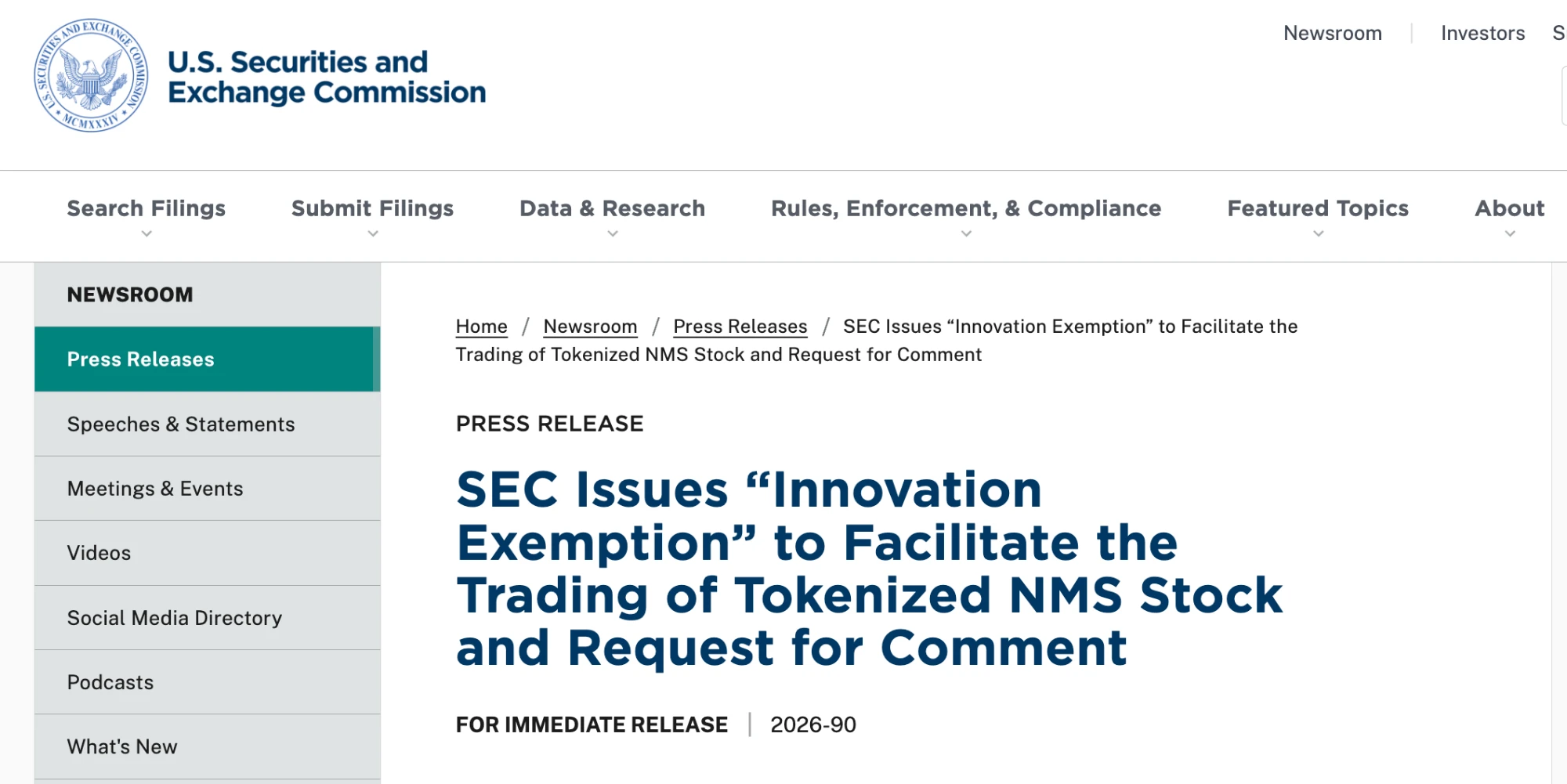
sec.gov · press release 2026-90 · 17 September 2026 ↗
Chairman Paul S. Atkins · U.S. Securities and Exchange Commission
Tokenized stocks are approved. Everything about who may trade them is now the venue's problem.
Hanko is that layer: permissions held as ENS names, enforced by the pool on every swap.
What a venue is
“TSVs bring together buyers and sellers of tokenized NMS stock by: (1) providing one or more AMM Liquidity Pool(s) for permissioned participants to interact and agree to terms of a trade and (2) setting standards for persons to access trading on such AMM Liquidity Pool(s).”
a wallet wants to trade
0x053674af…8055c9

permissioned pool
allowlist checker
your implementation
the pool answers
approved — trade goes through
The pool asks one question: is this address approved?
Uniswap ships the first job. A v4 permissioned pool calls one function on every swap and every deposit of liquidity — is this address allowed? The pool, the adapter and the hook are theirs and we use them as shipped.
It deliberately leaves the second one open. Who decides, on what basis, and for how long is the venue's to answer. That empty socket is where Hanko goes.
Our answer
The same question, answered by a name instead of a boolean.
asks Hankowhich reads
a cleared investor
0x053674af….swap.hanko.eth
resolved — the name exists and belongs to this wallet
The shape of the name is the permission. A name under swap.hanko.eth may trade. One under lp.hanko.eth may provide liquidity. A name sitting inside an investor's own registry is their agent, and can only trade.
A mapping would answer yes or no and forget the rest. When it should end, whether it can be handed on, who granted it, who is acting for whom — none of that survives a boolean.
Property · hierarchical delegation
Clear a firm once. Its bots hang underneath it.
hanko.eth
the venue, not the asset
└─swap.hanko.eth
a name here means: may trade
└─lp.hanko.eth
a name here means: may provide liquidity
└─0x053674af….swap.hanko.eth
the capital firm, cleared once
└─0xc408d425….0x053674af….swap.hanko.eth
its bot — the firm grants this itself, no second clearance
The venue lays out its registries.
A capital firm passes KYC once, not once per bot. It opens names for its own agents under its own name, scoped as it likes — swap only, liquidity only. The venue is not asked, and does not need to be.
Revoke the firm and every bot under it goes in the same transaction. Nothing cascades because nothing has to: a child of a lapsed name has nothing left to resolve through. There is no list of agents to find and clean up.
The conditions
“The exemption from the definition of “exchange” for TSVs is subject to conditions designed to ensure the exemptive relief is in the public interest and consistent with the protection of investors…”
Six of them. Three are access rules, and those are the three ENSv2 answers. The others — symbol limits, token rights, issuer notice — are not access control and we do not claim them. Summary of the order ↗
Condition · stopping
“A TSV must stop trading in a tokenized NMS stock concurrently with any stoppage of trading in the underlying NMS stock on the primary listing exchange.”
capital firm
swap + liquidity
└─ its trading bot
swap only
a liquidity desk
liquidity only
Halt the asset
Stops everyone, cleared or not.
Revoke a member
Takes their agents with them.
Three members, each with the scope they were granted.
The seals a member holds are the venue’s to withdraw. Halting the asset stops everyone at once. Revoking one member stops only them — and everyone acting on their behalf.
ENSv2 roles split who may do what. Registering a member and clearing one are separate grants, and a member's scope is separate again: some may only swap, some may only add liquidity. Nobody holds a power they were not given.
Property · non-transferable
Clearance is not something you can sell.
cleared investor
0x053674af…8055c9
a wallet the venue never cleared
0x2f6c3bde…9f297d
A seal sits with the wallet it was granted to.
Hanko registers every member name without the transfer role. An investor cannot sell, lend or gift their seal. The attempt reverts at the registry.
Without this, clearance becomes a tradable asset. A venue that vetted one party would find itself facing another, with no event to tell it that happened.
Condition · public notice
“A TSV must provide public notice about its operations, trading activities, and the trading activities of its affiliates on the TSV.”
capital firm granted a name in swap.hanko.eth
on-chainbot recorded as an agent of the capital firm
on-chainbot traded 0.72 tNVDA against 100 USDC
on-chaintrading halted for this asset
on-chaintrading resumed
on-chaincapital firm revoked by the venue operator
on-chain
Nobody has to take the venue's word for any of these. They are contract events, and the permissions themselves are ENS names.
Every operation on an ENS name is already an event. Grants, revocations, halts and trades are emitted by the contracts themselves. Hanko reads them back; it does not author them.
Notice you publish can be doubted. A public ledger cannot. A regulator or a counterparty checks ENS and the chain, not a page the venue maintains.